Wake up to music
Five minutes after I wake up, my amplifier turns on automatically and plays a Jazz playlist on shuffle. No manual action, no screen: just the right atmosphere to start the day.
About
Pierre, aka The Optimization Guy
A smart home enthusiast, daily optimization fanatic and tinkerer, I originally just wanted to "better manage my heating"… then I discovered Home Assistant, and I never really left.
Here, I share what I set up at home: automations, integrations, energy monitoring and fine-tuning for everyday comfort.
You'll find detailed real-world use cases, ready-to-adapt code and honest feedback on what works… and what doesn't, all with one obsession: optimize without over-complicating.

The origin story
My journey into home automation started very pragmatically, driven by two essential needs: security and heating control.
I started with mainstream solutions like Blink, then Tapo. These tools helped me discover the potential of connected homes… but also their limitations:
The turning point
Very quickly, these limitations became blockers. I then chose to migrate to Home Assistant, and progressively replace my devices with Zigbee-based, local and interoperable solutions. This change marked a real turning point:
Today
Since then, my setup has never stopped evolving.
Some automations have become so natural that I don't even think about them anymore, and that's precisely the sign that they're working perfectly.
Five minutes after I wake up, my amplifier turns on automatically and plays a Jazz playlist on shuffle. No manual action, no screen: just the right atmosphere to start the day.
I repurposed indoor motion sensors, installed in weatherproof junction boxes outside. They automatically trigger the lights around the house whenever movement is detected. Simple, reliable, and incredibly practical every day.
My mailbox is connected: mail delivered = instant notification on my phone, mail collected = the notification disappears automatically. No unnecessary reminders, no doubt: the information is accurate and contextualized.
I also developed a Home Assistant expert agent, used as a co-pilot to design, maintain and optimize automations.
Today, a large part of my work relies on Claude Code and its MCP, used as an automation engineering tool.
AI isn't there to "do things for me", but to improve the quality of decisions and the consistency of the system.
The biggest challenge in home automation isn't the installation, maintenance or bug fixes… it's getting your household to accept and use it. A technically perfect automation is worthless if:
User experience always comes before technical performance.
Capable of detecting and recognizing bird species.
With intelligent alert prioritization.
As a central notification and supervision tool.
For complex optimization and alerting workflows.
Three articles to discover the blog, from heating to the mistakes not to repeat.
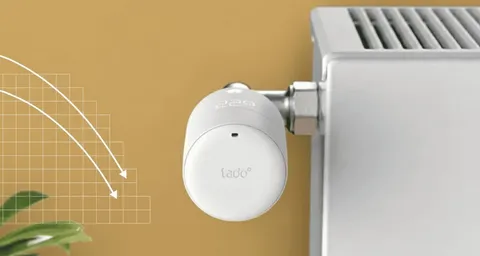
Real-world feedback after 2 years with a Tado thermostat and heads: kWh, euros saved, comparison method and savings simulator.
Real-world feedback after 50 devices: batteries, Wi-Fi, cameras, hubs… The traps to avoid and the simple choices for a stable foundation.
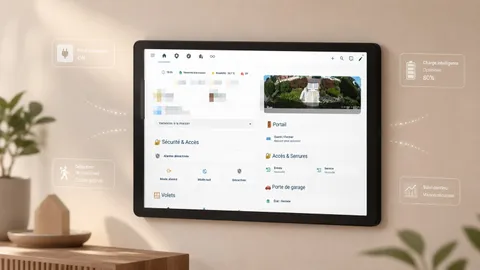
How I turned a Xiaomi Redmi Pad SE 11" into a permanent wall-mounted smart home dashboard with Fully Kiosk Browser: hidden cable, battery preservation, automatic wake-up. My honest take after several weeks.

An article idea, feedback on an automation: drop me a line.